
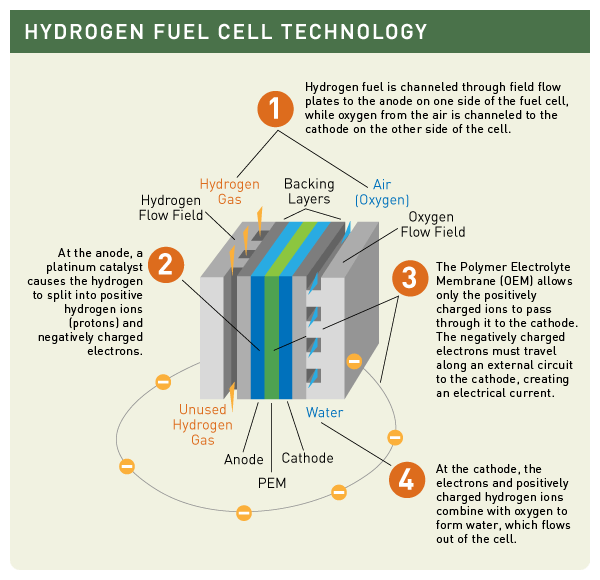
Hydrogen
Hydrogen is often called the fuel of the future because it contains no Carbon (and therefore produces no CO2) and it can be made from water.
However there are considerable problems to be overcome:
- the amount of energy required to make it, by separating the Hydrogen and Oxygen in water,
- its highly explosive nature when mixed with oxygen
- its very low density (the lightest material in the universe!) and consequent low energy density
So it is likely to be some years before it becomes a serious contributor. Nevertheless, Auto manufacturers are already working hard on the technology to use Hydrogen in internal combustion engines, and in the longer term in fuel cells, which produce electricity directly from the fuel, without burning, making it more efficient and much cleaner than a combustion engine.
Controlling Impurities and Additives
Certain substances that may be present in fuel, (impurities or deliberate additives) can directly interfere with emission controls devices, in some cases, permanently and these must be controlled, or eliminated.
The case of lead in gasoline is well known: in addition to its toxic effects as a pollutant, lead would contaminate and permanently damage catalytic converters and it has now been removed from gasoline in all but a few remaining countries.
Another common impurity in both gasoline and diesel is sulphur, which occurs naturally in crude oil, but can be removed during the refining process. Here again sulphur causes undesirable emissions – of sulphur dioxide and trioxide (which, combined with water, form sulphuric acid) and hydrogen sulphide (a poisonous gas with a characteristic – rotten eggs – smell). Sulphur also contaminates catalysts and is a problem for particulate filters and NOx traps. They can quickly become blocked by sulphur, which, at best, requires a special desulphurisation cycle to remove it, leading to higher emissions and fuel consumption, and at worst, can permanently damage the device.
Some countries now limit sulphur content or plan to do so (EU: now 50ppm and 10ppm by 2009; USA: now 80% at 15ppm, 100% by 2010; Japan now 50ppm) but levels as high as 3000ppm are still common in some countries.
Some fuel treatment additives, especially those containing metals, can lead to ash deposits in the exhaust which interfere with exhaust treatment devices and they can also cause build-up of deposits in the engine which change its performance. Careful control of these additives is important to achieve the right balance between their positive and negative effects.
Battery Powered Electric Vehicles
Battery Powered Electric Vehicles have been around in limited quantities for some time and have useful applications for inner city use because of their zero local emissions, but if the energy to recharge the batteries is generated using fossil fuels, there is no overall environmental advantage. In addition, the limited range provided by even the best current battery technology is a limiting factor in their usefulness for general use. Nevertheless, they have their place – especially where they can be recharged using electricity which is generated without using fossil-fuels – and the electric vehicle technologies that auto manufacturers have developed for battery-powered vehicles will provide the basis of future fuel cell powered vehicles.
Example Vehicles

Toyota Camry Hybrid

Mercury Mariner Hybrid